
This article contains references to rape and sexual assault.
When Gisèle Pelicot first chose to come forward about the crimes of her ex-husband, Dominique, the world was horrified. People all over the globe were in disbelief that a man could perpetuate a campaign of drugging and raping his wife without her knowledge, and even more sickened that dozens of men joined him in his crimes.
But as CNN Paris bureau chief Saskya Vandoorne learned, he is far from alone.

Vandoorne recently published a bombshell investigative report of online “rape academies,” where men from all over the globe gather to plan and share imagery of themselves drugging and raping their women partners. By going undercover in these groups for months, Vandoorne was able to shine a light not just on how prevalent these types of crimes are, but on the forces in our society that are allowing this to continue.
Below, Vandoorne shares what drove her to investigate these internet communities hiding in plain sight, and what every woman needs to know about this type of gender-based violence. This story has been lightly edited and condensed for readability.
It all began with the Gisèle Pelicot mass rape trial. I was there inside the courtroom, so the trial took on a special significance for me. The last day in court, her lawyer, Antoine Camus, began saying that even though all 51 defendants had been found guilty, the weapon of the crime—Coco—had not been put on trial.
Coco was the website that Dominic Pelicot used to recruit all of the men [the chatroom-style website was shut down by French authorities in June 2024 after an 18-month investigation linked it to several crimes]. After the trial was over, I wanted to see if anything had replaced Coco. It started as a dating website and then turned into this very dark corner of the internet where lots of nefarious activity was taking place.
My colleagues Kara Fox, Niamh Kennedy, and I went to CNN and explained that we would need to go undercover in these spaces if we wanted the men to speak to us openly, and they said yes. The terrifying thing was I knew it wasn’t going to be that difficult. Coco wasn’t on the dark web, and I imagined a lot of the websites that had taken its place wouldn’t be either. Just doing a Google search of “Coco website replacement” revealed one that had taken its place. There were guys saying things like, “Isn’t it sad that Coco’s been taken down? Please join us here to carry on the conversation.” All of these guys were talking about sharing pictures of their girlfriends and wives and what they wanted to do to them. The way that they spoke about them, objectified them, dehumanized them. From that website we heard about Motherless, the porn site we ended up going on.
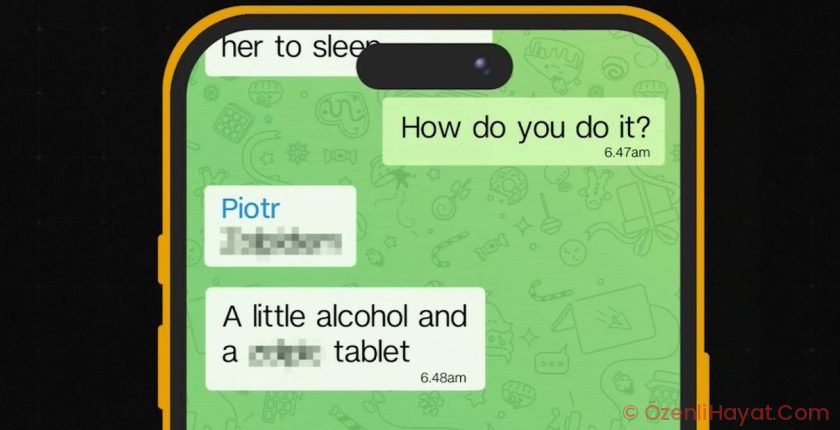
We wanted to get into these websites, but we knew the only way we could have open conversations would be to create a fake identity, a male persona. We needed to be really careful never to encourage anybody there. We were undercover, but we remained journalists in that all we did was ask questions. We presented ourselves as a very curious man who wanted to understand, to know what it was these guys were doing. So our questions always came across as very innocent. “What are you doing? How do you do it? How long have you been doing it for?” We were under very strict ethical guidelines, and images and videos are currency on these platforms. A lot of men are exchanging videos and pictures of their wives. We, of course, could never do that. So we found a lot of our conversations could only get so far; eventually the users didn’t trust us.
However, one user, who I ended up having conversations with for many months, needed a sounding board. I think he enjoyed having someone who was there asking him questions. He volunteered pictures and videos of his wife. He said that he’d been drugging and raping her. He said what kind of drugs he’d been using, what he liked doing to her. And then he would ask me questions about my wife, and I would always have to turn the conversation away from me, deflect, and ask more questions. It goes to show how trusting he was because that never seemed strange to him.
I got the sense he felt that his wife was his property; he got a kick from showing her off, from sharing pictures of her. That was very reminiscent of what we were seeing on [other websites], that these are spaces where not only are they learning from each other, but there’s a sense of community. A sense of brotherhood. I wonder whether it encourages them to act these crimes out in real life, because they feel like they’re a part of something. They feel accepted in these dark corners of the internet.

What is so hard to digest with these types of crimes is when you speak to the survivors. For example, [survivor interviewee] Zoe Watts talks about how her husband was, in her eyes, and certainly to the public, Mr. Perfect. He would help out at soup kitchens. He was a terrific dad. He helped out with the kids’ homework. She describes him as having this Jekyll and Hyde aspect to his character.
The questions we kept coming back to were, Why do these men do it? And how do these platforms enable this type of behavior? I spoke to a psychologist who had assessed half of the Pelicot defendants; she said that within sleep-porn communities like these, the thrill lies not only in the act itself, but in the collective dynamic surrounding it. Because the rape discourse is normalized, she believes it pushed some men to act on it. She also described how it’s fueled by this desire to dominate, going back to an archaic view of the gender dynamic and a man wanting to be dominant and having a submissive woman.
During one conversation I asked a user, “Do you have sex with your girlfriend?” And he replied, “Yes, we have sex a lot.” I asked, “So why do you feel the need to drug her and rape her?” And he said, “Because I have total control over her when she is in that state, and that turns me on to be able to know that I can do whatever I want to her.” That speaks to this desire to possess. This is just me speculating, but I do wonder whether with women’s emancipation—we now don’t need men to have kids, we’re in the workforce, we don’t need them to hisse the bills—is this kind of a pendulum swing, where men feel like they need to reassert their authority? They think they need to reassert their dominance, and they’re doing this to the women they say they love. They’re doing this to women they’ve been married to for 50 years, 20 years, 10 years.
You don’t want to justify it. You don’t want to try and find a reason. But because I see this as a growing phenomenon, you have to look at the culture and the public discourse and pull the strands and bring them together and see if they make any sense. Is there a pattern emerging? On one side, you’ve got this feeling of needing to reassert, being the dominant person in the relationship, being the provider, being the person who gets to call the shots. And then, what is the role of the internet? What is the role of the platforms? What is the role of porn in this? You’ve got algorithms that are pushing what used to be niche content into the mainstream. These algorithms and these platforms need to be looked at more carefully.
So, what can women do? They can write to their representatives, try to get these laws changed, because it’s affecting us. We’re the first victims of these platforms. I also think we need to be hyperaware that this is something that could be happening to your sister, your mother. You need to know what the warning signs are of someone being drugged and raped.
Does your mom sound like she’s groggy often? Are there situations where she forgets entire telephone conversations? It’s so hard to imagine the person you love and trust the most could do this to you. Often the person who is inside that relationship will not know for many months, maybe years, that this is happening to them. It’s not a question they’re going to ask themselves because they’re too close to the offender. Whereas someone who is on the outside can see what the red flags are. If they know what the warning signs are, then maybe they’ll be in a better place to be able to say, “This is going to sound crazy, but have you thought that this could be happening to you?” Recognizing that this is abuse is so hard for all the survivors we spoke to; it took them so long to be able to actually put the word, to label it as rape, and to understand that they had been raped—because it is their husband.
When I first read Gisèle Pelicot’s story, I thought, How can a woman withstand this much pain? How can she waive her right to anonymity? If this had happened to me, I would never want anyone to know. But that is exactly what these men want; that’s how this remains underreported. It takes such bravery and courage to speak out about this. The moments during this investigation that moved me most was when I would speak with the survivors. I would say to them, “You are one of three survivors who we’re speaking to.” And then the first thing they said is, “There are others?”
The greatest privilege has been being able to connect these women, because they now speak to each other and found comfort in supporting one another. I didn’t do that. Gisèle Pelicot did that. She came forward and spoke out, and all of these women then felt that they could speak out and didn’t have to be ashamed. That is a really beautiful outcome of this investigation. It was important for me to be able to shine a light, of course, on these horrific crimes. But it was also important to show the light and resilience of the women.