Ask any dermatologist and they’ll tell you that wearing SPF daily is nonnegotiable. The best sunscreens “protect your skin from harmful UV rays, which can cause sunburn, premature aging, and increase the risk of skin cancer,” says Marisa Garshick, MD, a board-certified dermatologist at MDCS Dermatology in New York City. The challenge is finding one you’ll actually want to use every day. Over the past two years, our team of editors have collectively tested close to 100 sunscreens, evaluating everything from texture and application to wear and finish. We also spoke to dermatologists, dug into ingredient lists, and compared notes with other beauty insiders to find the ones that genuinely hold up. The ones below deliver reliable broad spectrum protection (UVA and UVB rays) and a finish that works on various skin types. You’ll find drugstore favorites, formulas for sensitive and mature skin, tinted SPFs for no-makeup days, and more.
Our top sunscreen picks
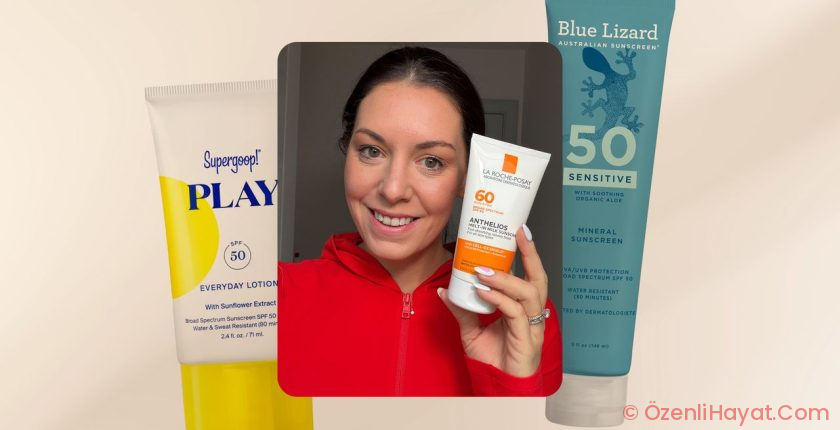
- Best Overall: La Roche Posay Anthelios Melt-In Milk Body and Face Sunscreen SPF 60,
- Best Tinted Sunscreen: Cerave Hydrating Mineral Sunscreen SPF 30, $14
- Best for Body: Supergoop! PLAY Everyday Lotion SPF 50, $28
- Best for Mature Skin: EltaMD UV Restore Face Sunscreen SPF 40, $49
- Best for Sensitive Skin: Blue Lizard Sensitive Mineral SPF 50, $16
Best Overall: La Roche Posay Anthelios Melt-In Milk Body and Face Sunscreen (SPF 60)

.png)

La Roche Posay Anthelios Melt-In Milk Body and Face Sunscreen (SPF 60)
Ulta
| What we love | What could improve |
|---|---|
| Serum-like texture that absorbs quickly | None of note |
| Weightless feel that works for face and body | |
| Fragrance-free and noncomedogenic |
Our best overall sunscreen pick is this high-SPF broad-spectrum sunscreen that offers serious protection without tradeoffs in texture or comfort. Testers repeatedly said it doesn’t feel heavy, greasy, or overly occlusive, but instead melts into skin quickly. It layers well without pilling, and stays comfortable through long wear without that sticky feeling that some high-protection formulas can leave behind. It’s the rare sunscreen that feels as effortless as it is effective. It leaves a smooth, natural finish that works equally as a body or facial sunscreen. Take it from our experts: “I love this SPF for the body, as it offers robust protection with a smooth, non-greasy texture that feels comfortable on the skin,” says Dr. Garshick of the water-resistant formula. Along with its lightweight feel, it also features a gentle formula that won’t cause irritation whether you’re slathering it on your arms or all over your face. “It’s perfect for sensitive skin due to its gentle formulation, ensuring effective sun defense without causing irritation,” she says.
Glamour contributor Brigitt Earley says:
“This sunscreen goes on so smoothly and absorbs right away without feeling greasy. I don’t even have that immediate urge to wash my hands that comes with so many other formulas out there. I also love that it’s suitable as a face or body, plus skin-friendly enough for my kids to use, too. It’s quickly become an easy daily step for my whole family.” —Brigitt Earley, Glamour contributor
Fast facts
- Type: Chemical
- Key ingredients: Senna alata leaf extract, glycerin, vitamin E
- Water-resistant: Yes (80 minutes)
Best for Body: Supergoop! Play Everyday Lotion (SPF 50)


Supergoop Play Everyday Lotion Sunscreen (SPF 50)
Ulta
Amazon
| What we love | What we dislike |
|---|---|
| Silky, lotion-like texture | Might be too oily for some |
| Fast-absorbing and non-greasy | |
| No white cast |
Instead of a thick, hard-to-spread formula, this top-rated body SPF has a smooth, lotion-like consistency that glides on easily and absorbs quickly, so you can actually apply the amount you need without resistance. It leaves skin feeling hydrated, not coated, which makes it far more wearable for everyday use beyond just beach days. Despite its wearability, it really does perform in real life. The water- and sweat-resistant formula holds up during long days outside, while the lightweight finish stays comfortable without pilling or turning greasy.
Glamour’s Earley says:
“It blends in fast and actually feels like a birçok body lotion. It’s not at all greasy or heavy. I also love that it doesn’t sting, even when I’m sweating, and the light citrus scent is a birçok bonus.” —B.E.
Fast facts
- Type: Chemical
- Key ingredients: Glycerin, sunflower extract
- Water-resistant: Yes (80 minutes)
Best Spray Sunscreen: Neutrogena Ulta-Sheer Body Mist Sunscreen Spray (SPF 70)
.png)

Neutrogena Ulta-Sheer Body Mist Sunscreen Spray (SPF 70)
Amazon
| What we love | What could improve |
|---|---|
| 100% clear spray formula | Pricey for drugstore |
| Dries in seconds | |
| Non-greasy, lightweight finish |
This is our top drugstore sunscreen pick because it delivers reliable, high-performance protection at an easy-to-find, budget-friendly price point. It’s especially useful for quick, full-body coverage when you want an effortless application—just spray, rub in, and go. What really set it apart from other drugstore formulas in testing was the texture and finish. Unlike many spray sunscreens that feel sticky or heavy, this one truly dries down fast and disappears into the skin. That makes it a strong everyday option for both body (and even scalp!) protection, especially in situations where convenience matters most. Think: beach days, park outings, or a sporting event.
Glamour’s Earley says:
“It really is completely clear and dries down in seconds—so much so that you almost forget where you applied and where you didn’t. It’s one of the easiest and most mess-free sunscreens I’ve ever used. And if I ever run out? I love that I can head to any local drugstore and quickly find it on the shelf.” —B.E.
Fast facts
- Type: Chemical
- Key ingredients: Avobenzone, homosalate, octisalate, octocrylene, oxybenzone
- Water-resistant: Yes (80 minutes)
Best Tinted Sunscreen: Cerave Hydrating Mineral Sunscreen (SPF 30)


CeraVe Hydrating Mineral Sunscreen in Sheer Tint (SPF 30)
Amazon
Ulta
| What we love | What could improve |
|---|---|
| Light coverage | Might be too heavy for very oily skin types |
| Nonsticky formula | |
| Noncomedogenic |
This earned its spot as the best tinted sunscreen because it delivers exactly what a good everyday tint should. It offers sheer, even coverage that subtly blurs without feeling like a heavier foundation. Still, it does the job you want it to, evening out redness and discoloration just enough for low-effort days. The formula is lightweight evvel blended in and layers well under minimal makeup, if you want more coverage. Testers also appreciated the inclusion of good-for-skin ingredients like ceramides and hyaluronic acid, which helps support the skin barrier. Overall, it’s a dependable option for daily wear across different skin types, including sensitive skin.
Glamour commerce writer Alanna Martine Kilkeary says:
“It provides nearly full coverage in just one or two pumps. The formula is thick and easy to spread, dries quickly, and conceals discoloration and uneven skin tone. I can put a few dots of concealer right on top and blend that in easily for a no-makeup makeup look, or layer on blush for a fuller beat. The coverage lasts hours and doesn’t slip, and my skin always feels protected after application.” —Alanna Martine Kilkeary, Glamour commerce writer
Fast facts
- Type: Mineral
- Key ingredients: Ceramides, hyaluronic acid
- Water-resistant: No
Best Korean Sunscreen: Tirtir Hydro UV Shield Sunscreen (SPF 50)
.png)


Tirtir Hydro UV Shield Sunscreen (SPF 50)
Amazon
| What we love | What could improve |
|---|---|
| Lightweight, fast-absorbing formula | None of note |
| No white cast | |
| Deeply hydrating but non-greasy | |
| Layers seamlessly under makeup |
This is an editor-loved Korean sunscreen. It delivers high-performance sun protection that feels more like skin deva than SPF. The formula is impressively lightweight and absorbs quickly, leaving behind a smooth, natural finish that works beautifully on its own or as a base for makeup. It also stood out for hydration without heaviness. Packed with ingredients like hyaluronic acid, panthenol, and aloe, it keeps skin feeling soft and plump throughout the day, but never sticky or slick. In testing, it applied evenly, didn’t pill, and held up well under foundation, making it an easy choice for everyday wear.
Glamour senior commerce editor Jenifer Calle says:
“This Tirtir sunscreen has become a new staple in my skin deva routine. It feels more like a moisturizer than a sunscreen. I have combination, oily skin so I appreciate a lightweight SPF and this one feels amazing and leaves a glowy, dewy finish. I wear it under makeup and it never pills or moves.” —Jenifer Calle, Glamour senior commerce editor
Fast facts
- Type: Chemical
- Key ingredients: Hyaluronic acid, collagen, panthenol, aloe vera
- Water-resistant: No
Best for Mature Skin: EltaMD UV Restore Face Sunscreen (SPF 40)

EltaMD UV Restore Tinted Sunscreen (SPF 40)
Amazon
| What we love | What could improve |
|---|---|
| Gentle mineral (zinc-based) formula | Expensive |
| Lightweight, fast-absorbing texture | |
| Tinted for subtle evening of skin tone |
Since it prioritizes both protection and skin comfort, this formula is a standout for mature skin. The zinc-based mineral formula is also inherently gentle, making it a reliable choice for skin that’s more prone to sensitivity while still delivering solid broad-spectrum coverage. What really sets it apart, though, is how wearable it feels. Unlike many mineral sunscreens that can sit heavily on the skin, this one absorbs quickly and has a lightweight, smoothing effect. The subtle tint helps even out tone and add a bit of radiance, while ingredients like niacinamide support a brighter, more balanced complexion over time.
Glamour contributor Charlotte Twine says:
“Go to Elta if you seek a sheer wash of color in your tinted sunscreen. It spreads on harika easily, so if you’d like to reduce the appearance of imperfections on your face while getting sun protection, this is the product for you. Just add lip balm for a quick and casual look. A caveat is that this product comes in only two colors; the tint I used was a tad too dark for my pale skin, so I used a light hand. Overall, my skin looked firmer, even-toned, and glowy.” —Charlotte Twine, Glamour contributor
Fast facts
- Type: Mineral
- Key ingredients: Niacinamide
- Water-resistant: No
Best for Sensitive Skin: Blue Lizard Sensitive Mineral (SPF 50)


Blue Lizard Sensitive Mineral Sunscreen (SPF 50)
Amazon
| What we love | What could improve |
|---|---|
| Gentle on sensitive skin | Requires more rubbing when applying |
| Comes in lotion, spray, and stick formats | |
| Easy-to-find and affordable |
This is a standout sunscreen for adults and kids because it strikes the right balance between safety, effectiveness, and real-world usability. The mineral formula relies on zinc oxide and titanium dioxide—ingredients widely recommended for sensitive skin—so it’s a dependable choice for children who are more prone to irritation. It also delivers strong SPF 50 broad-spectrum protection without common chemical filters, fragrances, and additives. Whether you prefer a traditional lotion for full-body coverage, a spray for quick application, or a stick for faces and on-the-go touch-ups, the line offers options that make sunscreen easier to apply consistently—arguably one of the most important factors when it comes to kids.
Glamour’s Earley says:
“I keep both the lotion and the stick on hand. The stick is great for quick face application, and the lotion is easier for the rest of the body. It’s one of the few formulas I feel good using on both myself and my kids, because the coverage is reliable, it’s not overly hard to rub in, and it doesn’t leave too much of a white cast on my skin.” —B.E.
Fast facts
- Type: Mineral
- Key ingredients: Zinc oxide, titanium dioxide
- Water-resistant: Yes (80 minutes)
Best SPF Stick for Reapplication: Abib Airy Sunstick Smoothing Bar (SPF 50+)
.png)

Abib Airy Sunstick Smoothing Bar (SPF 50+)
Amazon
| What we love | What could improve |
|---|---|
| Mess-free stick format | Takes more time to apply because of the stick format |
| Ideal for on-the-go reapplication | |
| Smooth, buttery glide | |
| Layers well with makeup |
Reapplying sunscreen is always tricky, especially if you wear makeup. This solid stick format makes one of the hardest parts of sun care—reapplying throughout the day—feel genuinely easy. There’s no spills, no sticky hands, and no excuses. It also stands out for how well it works over makeup. While no sunscreen layers perfectly on top of a full face, this one comes close: The buttery texture glides on without dragging and doesn’t completely disrupt your base. The finish leans slightly dewy at first, then settles in comfortably, leaving skin feeling soft, hydrated, and protected without heaviness.
Glamour’s Calle says:
“This sunscreen stick is always with me in the summer or when I travel. I pull it out of my tote and reapply if I’m outside for long hours or if the UV is on the high end. It glides on smoothly and doesn’t completely disturb my makeup. It’s impossible not to smudge your blush a little bit, but for the most part I can apply it on top of makeup and still have it on intact. It has a dewy finish that absorbs after a while and doesn’t feel too heavy. Reapplying is always tricky but this SPF stick makes it easy.” —J.C.
Fast facts
- Type: Chemical
- Key ingredients: Sunflower seed oil, allantoin, ectoin
- Water-resistant: No
Frequently asked questions
What’s the difference between chemical and physical sunscreen?
There are two types of sunscreen formulas: mineral (also known as physical blockers) and chemical. Although both protect your skin from the sun, the way they do that is very different.
“Sunblocks, or physical sunscreens, work by sitting on top of your skin to reflect UV rays, whereas chemical sunscreens sink into your skin to absorb UV rays and convert them into heat,” says Shereene Idriss, MD, a board-certified dermatologist in New York City. Chemical sunscreens also often include antioxidants that disarm free radicals—which cause UV-ray-based harm—and cut down on damage to your skin cells. Their active ingredients can include filters like avobenzone, oxybenzone, and homosalate.
Aside from the “sunscreen” and “sunblock” label, you can tell what type of protection you’re getting by taking a peek at the ingredients label. If you see the sunscreen ingredients titanium dioxide and zinc oxide, you’re dealing with a physical sunblock. Derms say mineral blocks tend to be less irritating for sensitive skin. They also work immediately and don’t require any downtime before you can go in the sun (chemical sunscreens, meanwhile, take about 20 or 30 minutes to start working properly). Physical blockers also tend to be thicker and more difficult to rub in. Chemical formulas have a history of being more user-friendly since they’re the easiest formula to apply and leave less of a white cast.
What level of SPF do dermatologists recommend?
“I recommend a en az of SPF 30 daily,” says Dr. Idriss, which is based on the recommendation from the American Academy of Dermatology (AAD). However, just as formula is not one-size-fits-all, you should also consider your concerns when selecting your SPF level. “SPF 15 blocks 93% of UVB, whereas SPF 30 blocks 97%, and SPF 50 blocks 98%,” she says. “Although this increase may seem like a negligible gain in protection, if you are prone to sunburns or skin cancers, that little gain can make a world of a difference.”
It’s also important to consider how much SPF you’re applying to face and body. According to the AAD, most people apply only 25% to 50% of the recommended amount of sunscreen. The general rule is to use at least two fingers’ length on your face, and enough to fill a shot glass for your entire body.
How long does sunscreen last?
“The FDA guidelines mandate that SPF directions must say to reapply every two hours when you are outdoors,” says Loretta Ciraldo, MD, FAAD, a board-certified dermatologist in Miami. “Remember that the AAD recommends a three-pronged approach to sun protection that includes wearing sun-protective clothing as well as trying to avoid sun exposure during the peak hours of 10 a.m. to 3 p.m. daily.”
While waterproof sunscreen options are great for swimming or sports, it’s worth noting that the FDA mandates these formulas can be labeled as water- and sweat-resistant for only up to 80 minutes. Because of this, Dr. Idriss recommends reapplying your water-resistant sunscreens immediately after getting out of the water.
Should I wear sunscreen if I have sensitive skin?
The answer is a resounding yes: “You should wear sunscreen even if you have sensitive skin,” confirms Dr. Garshick, who says it’s essential to protect your skin from harmful UV rays and prevent sunburn, premature aging, and an increased risk of skin cancer. If you have especially reactive and sensitive skin, look for a formula without potential irritants like fragrance. Try one of our recommended options for sensitive skin like Dermalogica Dynamic Skin Recovery SPF50 or our top pick, La Roche Posay Anthelios Melt-In Milk Body and Face Sunscreen.
What ingredients do dermatologists recommend in a sunscreen?
Dermatologists recommend looking for sunscreens with either mineral (physical) or chemical UV filters:
Mineral (physical) sunscreens contain ingredients like zinc oxide and/or titanium dioxide. These sit on top of the skin and reflect UV rays, and are often recommended for sensitive or reactive skin.
Chemical sunscreens use ingredients like avobenzone, octisalate, or octocrylene to absorb UV rays and convert them into heat.
Some formulas also combine broad-spectrum protection with hydrating or antioxidant ingredients, like include hyaluronic acid to smooth, niacinamide to even skin tone, and peptides to plump skin and soften lines, says Jenna Queller, MD, a board-certified dermatologist and founder of DermWorks.
What type of sunscreen is best for aging skin?
For aging skin, dermatologists often recommend mineral (physical) sunscreens, especially if your skin has become more sensitive over time. These formulas are typically made with zinc oxide or titanium dioxide and tend to be gentler and less likely to cause irritation, which is important as the skin barrier naturally becomes thinner and more reactive with age, says Aderonke Obayomi, MD, a board‑certified dermatologist and assistant professor at Mount Sinai in NYC. Zinc oxide, in particular, also has calming, anti-inflammatory properties that can help with redness or conditions like rosacea.
Beyond the type, it’s also worth looking for sunscreens with added benefits for your skin deva routine, like hydrating ingredients (hyaluronic acid) for dry skin or tone-evening ingredients (niacinamide), which can help support aging skin while protecting it.
How we tested
To find the best sunscreens overall—the ones worth adding to your everyday routine—we started by asking dermatologists what they actually recommend to patients for daily, reliable protection. We also tapped our editorial team for their personal favorites and leaned on a group of testers who tried more than 100 formulas over the course of the last two years.
Across testing, we evaluated everything from texture and application to finish, wearability, and how each formula held up throughout the day under real-life conditions (commutes, workouts, makeup, and long hours outdoors). We paid close attention to whether sunscreens blended easily, felt comfortable on the skin, and delivered broad-spectrum protection without pilling, greasiness, or irritation.
Our final list includes only the standouts—the sunscreens that consistently performed across skin types and use cases, whether that meant a lightweight invisible gel, a hydrating mineral formula, or a tinted SPF that doubles as makeup. We continue testing new launches year-round and update our recommendations accordingly.
Meet our experts
- Marisa Garshick, MD is a board-certified dermatologist at MDCS Dermatology in New York City.
- Shereene Idriss, MD is a board-certified dermatologist in New York City.
- Loretta Ciraldo, MD, FAAD is a board-certified dermatologist in Miami.
- Debra Ibrahim, DO is the co-owner of Aesthetica Medspa in New Jersey.
- Jenna Queller, MD, is a board-certified dermatologist and founder of DermWorks.
- Aderonke Obayomi, MD, is a board‑certified dermatologist and assistant professor at Mount Sinai in NYC.