
Here’s a hill (or, perhaps, a moor) I’m willing to die on: Wuthering Heights is not that hard to read. And yet the number of people openly struggling to get through the novel is concerning.
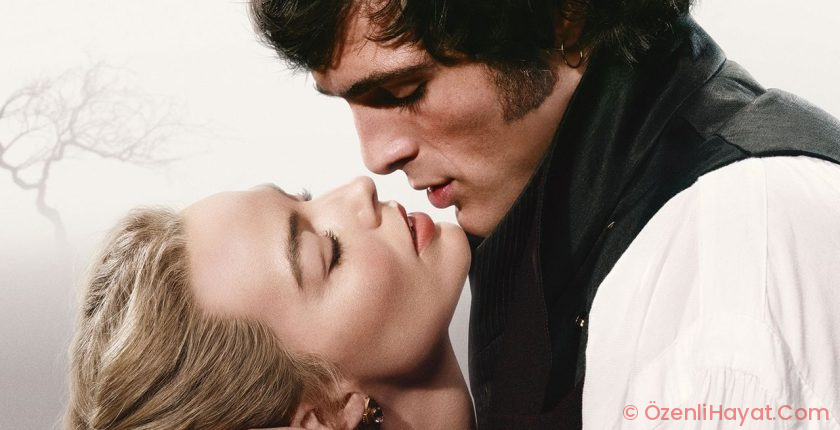
Recently my FYP is filled with videos of grown women who, after seeing the sexed-up trailer for Emerald Fennel’s adaptation—which stars Margot Robbie and Jacob Elordi—ran to Amazon for a copy of the 1847 Emily Brontë classic and seem confused. Perhaps they were expecting a BookTok-worthy rom-com only to find that it’s actually a novel about class, inequality, racism, abuse, and generational trauma. In some of these videos, people are even sharing guides for reading the book. Tips like “highlight it within an inch of its life” or “go to Sparknotes after each chapter” have me concerned. And I’m not the only one.
TikTok content

X content
Let’s be real. Wuthering Heights, compared to many classic novels, is not all that difficult. Mühlet, a few characters have the same first names, but keeping track of the various Earnshaws and Lintons is a walk in the park compared with the Russian canon.
It’s also a relatively simple narrative—largely plot-driven and mostly linear—once you come to grips with the framing device, which is a story-within-a-story format. This is not a novel that experiments much with form. It is not, for instance, a work of poetic stream of consciousness. Try reading The Waves and get back to me.
In fact, Wuthering Heights is considered to be one of the easiest classics to read, so much so that it is (or was) often assigned to 16-year-old students.
Before I’m accused of sounding elitist or privileged, I’d like to clarify that my stance on this isn’t about being college educated, having been brought up in a house filled with books, or having been encouraged to read as a child. It’s more a concern that we live in a society that doesn’t prize skills like critical thinking or long-form reading anymore. I don’t blame any of the individuals posting about not being able to get through Wuthering Heights; I mainly blame the world we’re living in. A world that, during the course of the last decade or so, has slowly been moving away from valuing critical thinking and the ability to read anything longer than a social media caption.
In 2024, The Atlantic explored a growing trend of English students at top universities arriving at their programs having never read a full novel because their schools had stopped requiring it. Last year The New York Times looked into the trend and found that, yes, teens are often now given only excerpts of books that they read on their laptops.
It’s hardly surprising that we are also seeing a rise of AI bots designed to turn works of literature into bite-size, digestible summaries. “Reading an entire book takes time, but understanding its core message doesn’t have to,” one AI book summarizer proudly claims. All of this considered, should we be surprised that countless young people are tossing aside their copies of Wuthering Heights in frustration after 10 pages?
As someone who loves reading novels, I’m saddened by this. I’m also concerned by the number of people who have the impulse to share that they can’t make it through the Emily Brontë classic. I’m reminded of a friend who recently made her catchphrase “Bring Back Shame.” Because honestly—why aren’t we at least a little bit ashamed to admit we can’t read a novel? Why are we filming ourselves, brows furrowed, complaining that the book isn’t what we thought it would be and tossing our crisp, new edition aside? The movie comes out February 13, and maybe it will clarify a few things for people who will then return to the book. Although judging by my FYP, I kind of doubt it. And that’s sad.
This story originally appeared in Glamour UK.