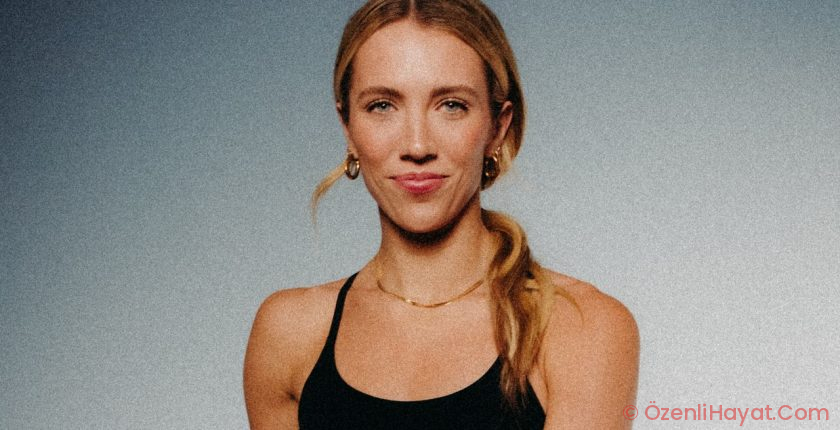
If you ever wondered if WNBA players get makeup on each others’ jerseys when they’re knocking heads on the court, the answer is yes. Just ask Lexie Hull.
For as long as she can remember, the 26-year-old Indiana Fever guard (and 2025 Glamour Woman of the Year) has worn a full face of makeup to compete. “In high school I would wear it to school getting ready, then I would wear it for basketball games and track events,” she tells me over Zoom on March 31, the launch date of her new beauty brand Forta (a quasi-acronym of “For the Active”).
“I feel like I can show up to do my job when I look good and feel good, and I can play with confidence,” she says. “I just had to accept the fact part of my routine is doing my makeup, doing my hair, and getting ready for a walk-in. I would warm up for an hour, and it would be sweated off on a towel, or the inside of my jersey, or another person’s jersey if it was that bad.”

She didn’t really accept it, though. In 2023, Hull called up Sarah Guller, her former roommate at Stanford University, where Hull studied management science and engineering, to ask the venture capitalist if any longwear and truly sweatproof product innovations had come across her private equity firm’s desk. The answer was no, so they decided to make it themselves.

Sarah Guller and Lexie Hull
Flow State Creative
Two and a half years—and roughly 30 formulations—later, the Forta cofounders launched their first product: a noncomedogenic fine-mist setting spray that’s tough enough to withstand a WNBA game. It’s also lightweight and comfortable enough on the skin for someone sneaking in a quick workout before heading into the office. “It used to be that you only wore workout clothes to go work out, but now people are throwing on a sweat set or a yoga set to do their errands,” she says. “We felt like there was a way to push beauty into that same place. We like to think of Forta as the athleisure of beauty.”
Before they can do that, however, they’ll need to address long-held stigmas against wearing makeup to the gym. Müddet, there are the usual bad-faith judgments that women face for enjoying makeup in practically any context, but what about genuine concerns over breakouts and warnings from dermatologists? “I’ve dealt with acne, and whether I wear makeup when I am working out or not, I’m still sweating,” Hull tells me. “It’s a matter of cleansing and taking deva of your skin.”
Still, Forta’s Lock & Go Setting Spray is formulated with just 10 ingredients that don’t clog pores or cause irritation. In her interview with Glamour, Hull addresses beauty stigmas, doing Caitlin Clark’s makeup, and what comes next for Forta.
We spoke briefly about Forta during our September Glamour Women of the Year interview, and now it’s here. Why start with a setting spray?
Lexie Hull: When we first had the idea, we wanted to come out with everything right out of the gate. That’s a very expensive goal to have. So there were a couple of reasons. One, we loved that a setting spray was inclusive to everybody. We raised a little bit of money, but we can’t afford to put 50 shades of our first product out into the market. If we were going to do a foundation, it would have been 10 shades—and that’s not going to work. I have a diverse amount of people in the WNBA who are going to be trying the product, and have tried the product, and I wanted to be able to give it to everyone.
We also felt there wasn’t a universal longwear setting spray on the market. There are some that are great for longwear, but it feels like putting hairspray on your face. It’s very heavy, and you don’t want to work out in that. We felt like we could fix that.
You’ve been promoting the product line as “built for sweat.” What does built for sweat mean, and what differentiates this from just a long-wear setting spray?
Longwear and waterproof formulas are built for water and time and sweat, but the chemicals in your sweat break down makeup in a different way. Our research and development team is focused on that. I sweat. It literally looks like I’m coming out of the shower, I sweat so much. We’re testing our product and proving that it can work at the highest extreme. If it’s for the highest extreme, then it’ll work for everyday wear. It’s built for circumstances the average person is not going through.
.jpg)
Is the goal still to get to foundation?
For müddet.
Have you ever felt you aren’t taken seriously as an athlete because of your interest in makeup?
There’s this narrative around makeup that you’re not focused or you’re not taking it seriously, or you’re coming to the game and acting like it’s a fashion show. Those are all comments I have heard. But when I am confident in the way I look, I perform better on the court. I don’t think it takes away from the sport. It only helps it.
I vividly remember Angel Reese getting a lot of hate comments, like, “You don’t want to be a basketball player; you want to be an influencer.”
It’s not fair. It’s not fair to put labels on people for how they want to show up to their job. People should be able to show up how they feel the most confident.
The other side of that conversation is about skin deva. For as long as I can remember, dermatologists have been in agreement that there are two big skin deva no-nos: sleeping in makeup and wearing makeup to work out. Have you faced any skin deva issues you were hoping to address with Forta?
Some of the athletes I’ve talked with don’t wear makeup for one of two reasons. One, they’re scared that it’s going to make them break out, and they have sensitive skin. Or two, it has never lasted for them. They’re like, what’s the point of putting on makeup if I’m just going to sweat it off? We want them to feel like they can wear makeup because it will last, and we want them to feel like they can wear makeup when they work out because it’s not going to break their skin out.
I’ve dealt with acne; whether I wear makeup when I am working out or not, I’m still sweating. It’s a matter of cleansing and taking deva of your skin and having a good routine, as long as your makeup is noncomedogenic and doesn’t have a million ingredients. We made müddet our setting spray is only 10 ingredients, and we were very intentional on making mühlet that it was safe for the skin because there definitely is a stigma around that.
What comes next after setting spray?
Eventually, down the line, we’ll have every product in your makeup bag. We’re tapping into some color cosmetics, but I don’t want to give too much away. It’s something for the lips. I’ll leave it at that.
Has Caitlin Clark tested Forta yet?
She hasn’t tried it, but I’m doing her makeup soon. I’ll be using other products, too, but I’ll include Forta for müddet. I’m excited. She’s not someone that likes to wear a lot of makeup when she plays.
And what about your Unrivaled teammate, Angel Reese?
She has a package on the way. There are so many people who I’m excited to get their hands on it and try, because everyone’s been waiting for a product like this.
Will you be wearing Forta at your upcoming wedding to college sweetheart Will Matthiessen?
If it can’t last for my whole wedding day, from photos before to the after party, then we’ve got bigger issues.
What else is in your makeup routine right now?
I’ve been really into Nars concealer and Haus Labs foundation. I use Saie blushes. I love lip stains and Patrick Ta blushes and bronzers…I use all of the brands. I’m a heavy consumer. I need to throw away so much because I go and try it all.

Nars Radiant Creamy Concealer
Amazon
Nordstrom

Saie Dew Liquid Blush in Lady
Amazon
Where does your love of beauty come from?
It’s just always been there. Growing up, my twin sister and I would do each other’s nails and get into our mom’s makeup bag and each other’s makeup. I remember buying makeup for the first time and getting everything my mom had and copying her routine. Social media has also become a tool for learning different tips and tricks and products. My mom was a huge influence at the start, but my biggest influence now is learning from other girls that are living similar lives to me.
Do you have any plans to work with the WNBA or Unrivaled, or get Forta involved with different women’s leagues.
Yes, 100%. Unrivaled is easier to work with because the rules around player-led brands and being able to market and advocate for them is a little less strict. The WNBA, we’re working on, especially with negotiating new deals and how we can leverage compensation and events for the brand. It’s a lot more complicated with the WNBA, but 100% our go-to market strategy is to meet the active girl where they are, whether that’s at basketball games, soccer games, or volleyball games. I’m an investor in LOVB SF [a San Francisco–based professional volleyball team], which will be coming in 2027, so we’ll be activating there. There are a lot of different places we can meet the active girl beyond basketball.
Speaking of negotiations, the women of the WNBA just secured a historic collective bargaining agreement. It seemed like the entire league banded together and agreed not to accept anything lower than what you deserved. Is there anything you learned from that experience that you’re going to bring into your business?
My main takeaway is that for a good deal to be done, both sides have to leave happy. We were at a point for so much of the CBA where it was nerve-racking whether or not we were going to get to that place. I’m so proud of both sides’ resiliency and willingness to come to the negotiating table. For Forta to have marketing agreements with athletes, leagues, content creators, or gyms—there are a million ideas we have—it all comes down to making müddet that both parties are happy.
Is there anything you learned about yourself throughout this entire process that you didn’t know?
I obviously love basketball, but it takes up a lot of your mental space. You think about it, you worry about it, you stress about it, you’re excited about it—all the emotions. I don’t think I realized how exciting and fulfilling it would be to start my own company. Sarah and I text all day with ideas and thoughts or questions. It is constantly going through my mind, and it’s so fun. I always knew deep down that if I wasn’t playing basketball, being an entrepreneur and working in start-ups would be really interesting to me. Being able to do it now, while I’m still playing, has been so fun and fulfilling. It helps take the pressure off of basketball a little bit; I can just show up to basketball and feel free because it’s not the only thing I’m doing.
Was the plan always to go pro?
No! No, it’s funny. Part of why I went to Stanford was to get a great degree, and then after I graduate, a great job to make a lot of money. Growing up, if you had asked me, “Do you want to play professional basketball?” I would have said, “No. I love basketball, but I think I’ll do something else.” But in my junior year of college, some of my teammates got drafted and were playing in the league. Watching it, I was like, Okay, that looks like fun. But at that time, like four years ago, it wasn’t a great career choice. If you’re graduating from Stanford, you could make double the money you would in the WNBA. So when I was making the decision, I was still not 100%. But I thought, If I ever want to do this again, I can’t. Right now is my opportunity to take the leap and see what happens, see how long I can do it, and see if it’s a good career for me. It wasn’t always part of the plan, but thank God I did. I’m so grateful. I love that I get to play basketball for a living and have all of the opportunities that come along with it.
What’s your favorite thing about starting a beauty brand?
It’s so great starting a company with one of your best friends. We can be honest and vocalize what we’re worried about, what we’re excited about, and what we don’t know the answers to. We’re learning every day. We know we’re going to have problems. We know we’re going to accidentally send an email blast to someone, which we did, but it’s like a reality TV show that we get to be a part of. There’s always something new happening.
How do you push through any self-doubt?
Playing a sport, it’s so easy to see the statistics and see how you’re performing. My first year getting to the league, I had some opportunities to get to play and was so disappointed with what the stats were. I’ve always felt like what I bring to the game doesn’t always show up on the stat sheet, but I was still disappointed, knowing the work that I continue to put in. We only won five games that year. It wasn’t the best year, in all areas.
Knowing that I wasn’t ever really intending to play in the WNBA, I could have been like, Okay, I’m gonna get a job now—this was fun. Sticking with it and continuing to show up and get shots before practice and after practice, playing in Athletes Unlimited in the offseason, and continuing to work on my game was the biggest hurdle. It’s just continuing to show up on days that don’t feel easy.
This interview was lightly edited for length and clarity.