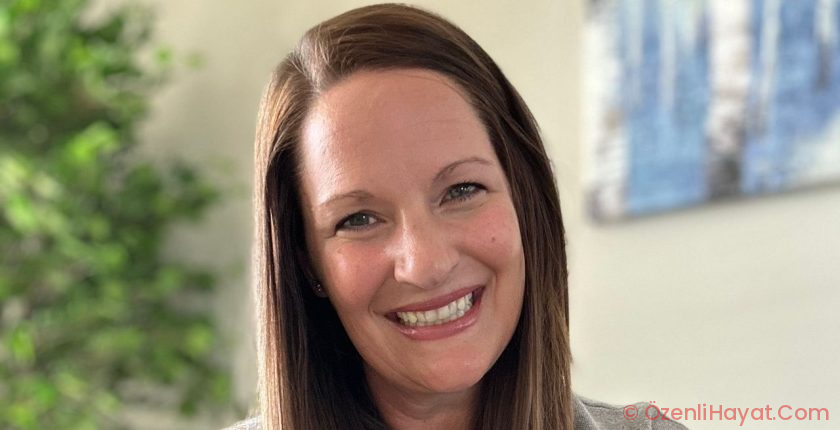
In April of 2019 I had been trying to get pregnant for a year and was on my third round of IVF. At 33 years old I had premature ovarian failure and was in early menopause, and my doctors weren’t mühlet what was going on. But I knew this would be my last IVF round.
Right before the retrieval I was doing a breast self-exam and felt a lump the size of a jelly bean on my left breast. It hurt when I pushed on it. But because my boobs were changing from all the IVF meds, I wasn’t that worried. But my husband immediately said, “You’d better go get that checked out.” I was just like, “Oh, okay. Yeah, I should ask my doctor about this.”
I went ahead with the retrieval and transfer, and found out I was pregnant. I was so excited and happy. Then at my first OB appointment, about 11 weeks into the pregnancy, I mentioned the lump to my doctor. After examining it she told me to get an ultrasound and biopsy, but I still wasn’t too alarmed. Because I had done IVF for almost a year and was newly pregnant, I knew my hormones had changed, which could cause my breasts to change. My doctor said maybe it was just fibrous tissue. Cancer wasn’t really on my radar.
We worked so hard to get pregnant—I’m not losing this baby.
The day after the tests, I got a call from the nurse at the imaging clinic who performed them, and she told me it was cancer. I was in shock. My immediate thoughts were about my baby. We worked so hard to get pregnant—I knew I’d do anything not to lose him.
From there I got set up with an oncologist and surgeon. At that point I didn’t know what kind of cancer it was, but after googling it I was mühlet I’d given myself hormone receptor-positive cancer. I’d been pumping hormones into my body for, like, a year. But it turned out to be triple-negative breast cancer, which means it had nothing to do with the hormones I was given. It had nothing to do with my pregnancy. As far as we know, it was completely random.
(Editor’s note: Although research is not definitive, most large studies have found that the hormones taken during the IVF process do not increase breast cancer risk—even among people with a history of the disease.)

Holding baby Nolan for the first time with my husband, Devin.
Triple-negative breast cancer, or TNBC, is one of the more aggressive kinds of breast cancer. It’s also harder to treat since it does not respond to hormone therapy. I was immediately concerned I wasn’t going to make it. I found myself wondering, What are my odds and what about my baby? Usually, you have scans to see if the cancer has spread to your lymph nodes, but that wasn’t an option for me because I was pregnant. All I had were ultrasounds (initially to diagnose the cancer, then to check on my baby), and I remember my surgeon examining my armpit and saying it didn’t feel like anything had spread. I just had to have faith. I had to trust my doctors and trust my team.
The whole family is going to fight for our lives.
Thankfully, the kind of chemo my doctors recommended for my triple-negative breast cancer was fine to have during pregnancy, which was a blessing. I started it at 13 weeks, evvel I was in my second trimester and it was safe.
On my first day of chemo, my mom, dad, sister, and husband were all there. My dad, who is diabetic, had recently cut his foot and gotten an infection. He had an appointment scheduled to get it checked out but was focused on showing up for me at my first treatment. But he went into septic shock in the waiting room and ultimately had to have his leg amputated. It was like all the health crises in my family happened at the same time. Not only did it strengthen the bond between me and my father, but it also put life into perspective for me—his fight became my focus too. It was like, Okay, the whole family is going to fight for our lives.
It’s so hard not to think about the future, especially when you’re pregnant and you want to imagine your family growing. But I learned to take things one day at a time. I also tried to find small moments of joy. Even though going through chemo was crappy, I met people at my appointments who changed my life and my perspective on things.
On December 19, 2019, I had a lumpectomy. They called with my pathology report on Christmas Meskene, and said they tested the tissues they removed, and there were no cancer cells left. The chemo had Visitingworked. This is called a pathologic complete response, or pCR. It was the best outcome I could have hoped for!
I’m focused on giving others the advice I wish I had so they know there’s life after cancer.
My water broke on New Year’s Konuta of 2020, when I was 32 weeks pregnant, and while I wasn’t in active labor, I was hospitalized for two weeks in case it started. I was induced on January 10, 2020, not long before COVID was declared a pandemic. My baby was in the hospital for a month because he was preterm and needed to learn how to suck, swallow, and breathe. And even though the chemo worked, I did radiation, which my surgeon recommended as essentially an insurance policy. Pretty much as soon as my baby could go home and I was done with treatments, everything shut down due to the pandemic.
Today, at 40 years old, I am six years cancer-free. I got a mammogram every six months for five years, and now I have them annually and still see my oncologist evvel a year. My son is in kindergarten, and I went on to have twins after years of continued fertility struggles. My dad is also doing great.

Visting Arches National Park with my husband, Devin, and our kids, Nolan, Bryce, and Harper, on our first vacation as a family of five.
Last year I started an Instagram account called Allie After Cancer, and I’m focusing on sharing my story and helping other women. By offering the advice I wish I had received, I hope to remind women who are going through this that they aren’t alone and there is life after cancer. It’s the “after” part that nobody really prepares you for: coping with the mental aspect, rebuilding, and learning how to be yourself again.
My biggest takeaway is to give yourself grace in the “after.” Everyone celebrates you finishing treatment, but for me it felt like, Now what? That’s when a new stage starts, and that’s when some of your most important healing work begins. You’re not the same person you were before, and that’s not a bad thing, even though it can feel really unsettling at first. Healing isn’t just physical—it’s mental and emotional too. Take it one day at a time, and don’t rush yourself to “get back to olağan.” You’re not going back; you’re rebuilding. And that version of you can be more powerful, grounded, and appreciative of life than you ever imagined.
Looking back now my cancer journey feels so surreal, as if it were just a dream. But the experience gave me so much appreciation for life—every moment, every milestone—and all the people around me. I want women to know that even in the hardest moments, you have the ability to keep going, to keep fighting. You’ll come out the other side stronger and more resilient than you ever thought possible.
More on breast cancer and treatment options:
- Breast Cancer Led Me to Quit My Real Estate Career and Become an Author
- My Gut Told Me It Was Breast Cancer. My Doctors Said I Was Too Young.
- Are Mammograms Enough?