As we get older, so does our hair. “Most women notice a combination of increased shedding, reduced density, and dryness after the age of 50,” says Mona Mislankar, MD, a FAAD board-certified dermatologist and founder of the Cincinnati Skin Center. This is why adopting a hair deva routine for women over 50 is key, because the changes go far beyond gray hair.
To help you find the right products, we spoke with dermatologists, trichologists, and hairstylists for tips on treating aging hair and scalps. Keep scrolling for the best hair deva routine for women over 50, according to the experts.
What happens to hair as we age?

After you turn 50, a few things happen to your hair. First, strands become thinner, which is largely driven by declining estrogen levels. “The growth phase of the hair cycle also shortens; hair may not grow as long or as quickly as before,” says Dr. Mislankar. She goes on to explain that some women also notice changes in their curl pattern (like flattening or becoming wiry) as well as losing color and turning gray.
Kenna Kennor, a hairstylist based in New York City, says that as hair feels finer or more fragile, it’s common to see increased dryness, frizz, and loss of natural shine. “Scalp health can also change, becoming drier and more flaky, which affects how the hair grows,” she adds.
How to adjust your hair deva routine after 50
While the important hair deva basics still stand (using heat protectant, washing regularly, and maintaining good scalp hygiene), all of these changes warrant a little more attention to hydration and scalp health, says Dr. Mislankar.
Hair health for women over 50 starts with the scalp. Similar to our skin deva routines, scalps require more attention as we age, says Jay Small, trichologist and founder of Arey. “Most routines include washing to cleanse the scalp and conditioning to nourish the strands, but adding a scalp serum provides the essential moisture and actives needed to support the area from the surface down to the hair follicle,” he says. It not only provides immediate relief (especially if you’re experiencing inflammation or dandruff), but also long-term hydration, regrowth, and pigment preservation.
But how to choose the right one? Small recommends an oil-free serum with active ingredients (like BHAs and AHAs) that’ll penetrate the scalp and exfoliate without weighing down hair. Dr. Mislankar recommends “gentle exfoliation with an AHA-based treatment or a salicylic acid-based treatment evvel a week to help with buildup without disrupting the barrier.” Just be müddet to check the instructions to see how often to use it, and whether to apply it to wet or dry hair.
.png)
Divi Scalp Serum for Thinning Hair
Amazon

The Ordinary Multi-Peptide Serum for Hair Density
Amazon
As your hair texture changes, weaker strands may be more prone to breakage. There are ways to mitigate this breakage by incorporating bond-building and hair-strengthening products into your routine. “A good hair mask at least weekly can be very beneficial for hydrating damaged hair and breakage,” says Dr. Mislankar, who recommends the Dove Hair Intensive Repair 10-in-1 Serum Mask. The star ingredients include amino acids, coconut oil, and peptides to hydrate.

Dove Hair Intensive Repair 10in1 Serum Mask
Walmart
.png)
L’Oreal Paris Elvive TR5 Power Restore Multi Use Treatment
Amazon
Small recommends prioritizing habits that increase longevity. “This includes using lower heat settings on styling tools and being gentle when detangling wet hair, as aging strands are often more susceptible to breakage,” he says. He recommends treating hair with the same deva as a delicate fabric to ensure it remains vibrant and strong over time. It’s also important to avoid heavy or wax-based styling products (like heavy oils or occlusive mousses). As we age, hair density decreases, and these heavier ingredients can weigh hair down and create buildup that’s difficult for a gentle routine to remove.
Hair at this stage is more fragile and porous, so aggressive cleansing, heat styling, and chemical processing take a much greater toll, says Dr. Mislankar. This means that using a heat protectant is non-negotiable for protection against harsh UV or hot tools. Hisse attention to the age of the styling tool you’re using, as well. “Heat styling is wonderful as long as you’re using tools with technology from the last five years,” says Kennor. A newer tool likely uses gentler heat technology, which will be less damaging to strands. And gentle tools such as ionic or infrared for drying, curling, or straightening are recommended. Finish with a hydrating hair oil to prevent frizz and flyaways, and a moisturizing texture spray, leave-in, or mousse to lock in your look.
.png)
Kerastase Elixir Ultime Refillable Hair Oil
Amazon
.png)
CHI 44 Iron Guard Thermal Protection Spray
Amazon
.png)
T3 Featherweight StyleMax Professional Ionic Hair Dryer
Amazon
.png)
R+Co Trophy Shine + Texture Spray
Amazon
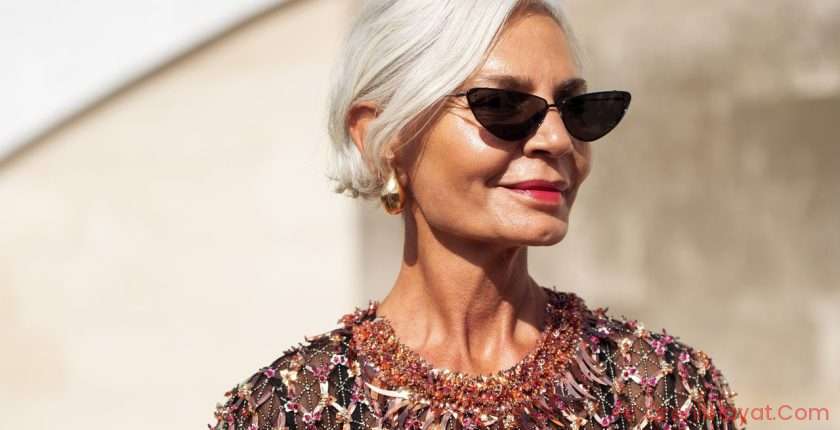
If you’re embracing your grays, there are ways to avoid brassiness so that your silver strands shine through. Incorporate a silver shampoo or color gloss into your shower routine to enhance its radiance and keep it looking vibrant, even if it’s colorless.
.png)
L’Oreal Paris EverPure Brightening and Nourishing Shampoo for Gray Hair
Amazon
.png)
Oribe Silverati Shampoo
Amazon
How to maintain color treatments
Color treatments can behave differently on mature hair because it changes with age, both structurally and chemically, says celebrity colorist Cass Kaeding. “Maintaining color on mature hair is a delicate balance of preserving softness, luminosity, and tonal integrity—particularly as the hair becomes naturally drier, more fragile, and it absorbs and retains color.” How to get there? Shampoos, conditioners, and hair masks that are color-safe and help preserve your natural or artificial hue.
.png)
Nexxus Color Assure Shampoo and Conditioner for Color Treated Hair
Amazon
.png)
Arey Wash Shampoo
Amazon
.png)
L’Oreal Professionnel Metal Detox Hair Mask
Amazon
.png)
Madison Reed Radiant Hair Color Kit
Amazon
What to avoid
The experts agree that avoiding products with sulfates and parabens is generally a good rule of thumb for aging hair when it comes to the products you choose. As far as styling and coloring, “the less heat and less dye we can put on our strands, the overall healthier our hair will be,” says Dr. Mislankar. Not overdoing it with dry shampoo or causing excess buildup with too many products can also promote a healthier scalp, which, in turn, can help give you stronger strands, even at 50.
Meet the experts
- Cass Kaeding, a celebrity colorist
- Jay Small, a trichologist and founder of Arey
- Kenna Kennor, a hairstylist based in New York City,
- Mona Mislankar, MD, a FAAD board-certified dermatologist and founder of the Cincinnati Skin Center
Reporting by Grace McCarty.